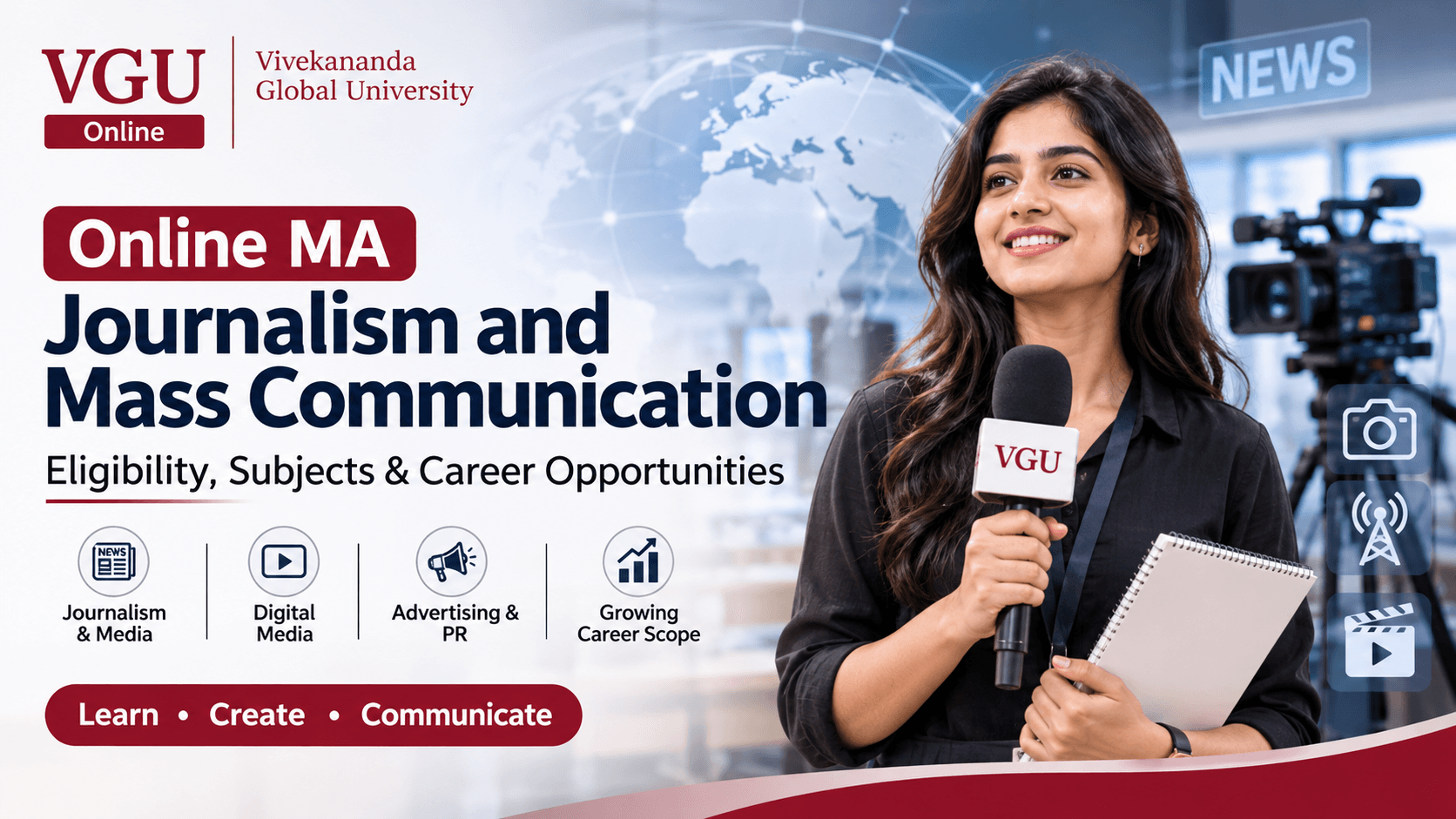
The media industry is changing rapidly. From digital news platforms and television channels to podcasts, social media, public relations and online publications, communication has become an essential part of how people access information and understand the world.
As media platforms continue to evolve, the demand for professionals who can research, write, report, edit and communicate effectively is also growing. For graduates who want to build a career in this dynamic field, pursuing a Master of Arts in Journalism and Mass Communication (MAJMC) can be a valuable step.
Today, students do not necessarily need to attend regular on-campus classes to pursue postgraduate education. An Online MA in Journalism and Mass Communication offers an opportunity to study media concepts, journalism practices and digital communication through an online learning format.
Vivekananda Global University (VGU) offers an Online MAJMC program designed to introduce learners to different areas of media, including print, radio, television, digital media and advertising. The program combines academic learning with skills relevant to modern communication environments.
In this guide, we will explore what an Online MA in Journalism and Mass Communication is, its eligibility criteria, subjects, duration, learning format, career opportunities and how to choose the right university.
What Is an Online MA in Journalism and Mass Communication?
An Online MA in Journalism and Mass Communication is a postgraduate degree that focuses on journalism, media studies, communication theories, news production, advertising, public relations and digital media.
The program helps students understand how information is collected, verified, produced and communicated through different media channels.
Unlike a program focused only on traditional journalism, modern mass communication education also introduces learners to digital publishing, social media communication, multimedia storytelling and evolving media technologies.
Students generally develop knowledge and skills in areas such as:
News reporting and writing
Editing and proofreading
Print and digital media production
Radio and podcasting
Television and video production
Advertising and brand communication
Public relations and media management
Media laws and professional ethics
Communication research
Digital content creation
An online learning format can make postgraduate education more accessible to graduates, working professionals and learners who want to continue their studies without relocating.
Why Choose an Online MA in Journalism and Mass Communication?
Journalism and mass communication are no longer limited to newspapers, radio stations and television channels. Digital-first publications, independent media creators, corporate communication teams and social media platforms have expanded the range of opportunities available to media professionals.
An online MAJMC program can help learners build a foundation for these changing professional environments.
1. Learn About Different Media Platforms
Students explore how different communication channels work, including print publications, radio, television, websites and social media platforms. This broader understanding can help them identify the media areas that match their interests.
2. Develop Professional Communication Skills
Clear communication is important in almost every media-related role. Students learn to organize information, write for different audiences, conduct interviews and communicate messages effectively.
3. Understand Digital Journalism
Digital journalism has changed how news is created, distributed and consumed. Learning about new media and digital publishing can help students understand online news platforms, multimedia content and audience engagement.
4. Explore Multiple Career Directions
A postgraduate degree in journalism and mass communication can support career exploration across journalism, public relations, advertising, content production, corporate communication and digital media.
5. Study Through an Online Learning Format
Online education can be useful for learners who are working, managing other responsibilities or living away from a university campus. Depending on the program's schedule, students can combine live sessions with self-paced learning.
Online MA Journalism and Mass Communication: Course Highlights at VGU
Vivekananda Global University offers an Online Master of Arts in Journalism and Mass Communication (MAJMC) through its online education platform.
The program covers multiple areas of media and communication, helping students develop a foundation in journalism, media production, advertising and digital communication.
Here are the key program details published by Online VGU:
Program detail | Information |
Program name | Online MA in Journalism and Mass Communication |
Degree | Master of Arts (MAJMC) |
University | Vivekananda Global University |
Mode of learning | Online |
Duration | 2 years |
Semester structure | 4 semesters |
Semester fee | ₹18,000 |
Total program fee | ₹72,000 for Indian nationals |
Registration fee | ₹1,000 |
Examination fee | ₹1,500 per semester |
Entrance examination | No entrance exam listed |
Learning format | Live sessions and self-paced LMS learning |
Fees and admission information are based on the program details currently published by Online VGU. Students should confirm the applicable fee, examination charges and admission conditions for their chosen academic session before enrolling.
Online MA Journalism and Mass Communication Eligibility Criteria
One of the first things students should understand before applying for a postgraduate program is its eligibility criteria.
The Online MAJMC program at Vivekananda Global University lists the following eligibility requirement:
Candidates must have completed a bachelor's degree in any discipline from a recognized university.
The program page also states that there is no entrance examination, no age limit and no restriction based on how long ago a candidate completed their previous degree.
Basic Eligibility Requirements
A completed bachelor's degree from a recognized university.
Graduation in any discipline.
Candidates should provide the required academic documents during admission.
Applicants must complete the university's prescribed admission process.
Can Students From Other Streams Apply for Online MAJMC?
Yes. Students from different academic backgrounds can explore this program.
For example:
A BA graduate interested in journalism can develop knowledge of reporting and media communication.
A BBA graduate can explore advertising, public relations and corporate communication.
A BCom graduate can consider business journalism and financial content.
A BSc graduate can explore science communication and research-based reporting.
A graduate already working in content or digital media can pursue postgraduate academic learning.
A background in journalism is not listed as a compulsory requirement for admission to the Online VGU MAJMC program.
However, students should check the current admission requirements and documentation process on the official program page before applying.
Online MAJMC Subjects: What Will You Study?
The curriculum of an MA in Journalism and Mass Communication generally combines theoretical understanding with practical knowledge of media production and communication.
At Online VGU, the program is structured over two years and four semesters. The published curriculum includes subjects related to communication theory, journalism, print media, radio, advertising, new media, research and business journalism.
Semester 1: Journalism and Media Foundations
The first semester introduces students to the fundamental concepts of communication and journalism.
Subjects include:
Communication Theory
Journalism: Concepts and Principles
Print Media: Production Tools and Techniques
Media Laws and Ethics
Media Management
Writing for Media
What will students learn?
Students develop an understanding of how communication works, how journalism operates and how print media content is produced. They also explore the responsibilities of journalists, media regulations and ethical considerations.
Writing for the media introduces students to the importance of presenting information clearly and accurately for different audiences.
Semester 2: Radio, Advertising and Digital Media
The second semester introduces additional media formats and communication practices.
Subjects include:
Radio: Concepts and Principles
Advertising: Concepts and Principles
New Media
Media and Communication Research
TV and Film Appreciation
Business Journalism
What will students learn?
Students explore radio communication, advertising strategies, digital media platforms and research methods. They also develop an understanding of television, films and business-related news coverage.
These subjects provide a foundation for understanding how media organizations communicate with audiences across different platforms.
Semester 3 and Semester 4
The Online VGU program is structured across four semesters. Students should refer to the latest official syllabus or program brochure for the complete third- and fourth-semester subject lists, as curriculum details can be updated.
Important: The subjects listed above reflect the first- and second-semester curriculum currently published on the Online VGU program page. Always check the latest academic syllabus for the complete course structure.
Skills You Can Develop During an Online MAJMC Program
A postgraduate programm in journalism and mass communication can help students develop a combination of communication, research, creative and technical skills.
Some important skills include:
1. News Writing and Reporting
Learn how to identify newsworthy information, collect facts, conduct interviews and prepare reports for different media platforms.
2. Editing and Proofreading
Develop the ability to review written content, improve clarity, correct errors and organize information before publication.
3. Digital Content Creation
Understand how content is created and published for websites, online publications and digital platforms.
4. Multimedia Storytelling
Explore how text, images, audio and video can be combined to communicate information and stories effectively.
5. Photography and Photojournalism
Learn the importance of visual communication and how photographs can support news reporting and storytelling.
6. Radio and Podcasting
Understand the basics of audio communication, radio production and podcast formats.
7. Advertising and Brand Communication
Explore how organizations create messages, communicate brand values and connect with their target audiences.
8. Media Relations and Public Relations
Develop an understanding of communication between organizations, media professionals and the public.
These skills can be valuable across traditional media, digital publishing, advertising, corporate communication and content-related roles.
Career Opportunities After an Online MA in Journalism and Mass Communication
Journalism and mass communication graduates can explore career opportunities across several industries.
The right career path depends on an individual's interests, practical experience, communication skills, portfolio and professional development.
Here are some career options to consider after completing an MAJMC program.
1. Journalist or Reporter
Journalists research events, gather information, interview people and prepare news reports. They may work with newspapers, digital news portals, television channels or independent media organizations.
2. News Editor or Sub-Editor
Editors and sub-editors review news stories, improve language, verify details and prepare content for publication. They help maintain accuracy, readability and editorial quality.
3. Content Writer
Content writers create articles, blogs, website content, features and other written material for businesses, publishers and digital platforms.
4. Digital Content Producer
Digital content producers plan and develop content for websites, social media platforms and online publications. Their work may involve coordinating writers, designers, photographers and video editors.
5. Social Media Executive
Social media executives manage brand communication across platforms. Their responsibilities can include content planning, publishing, audience engagement and performance monitoring.
6. Public Relations Executive
Public relations professionals help organizations build and maintain relationships with the public and media. Their work may involve press releases, media coordination, event communication and brand reputation management.
7. Advertising and Copywriting Professional
Advertising professionals develop promotional messages for brands, products and services. Copywriters create headlines, campaign content, advertisements and marketing communication material.
8. Broadcast Journalist
Broadcast journalists work with television and other broadcasting platforms. Their responsibilities may include reporting, scriptwriting, presenting and preparing news segments.
9. Radio Jockey or Podcast Producer
Individuals interested in audio media can explore opportunities in radio, podcasting and audio content production. These roles require strong communication, presentation and storytelling abilities.
10. Media Researcher
Media researchers collect and analyze information related to audiences, communication trends, media content and industry developments. They may support research organizations, media companies and academic projects.
11. Corporate Communication Executive
Corporate communication professionals manage internal and external communication for organizations. They may prepare company announcements, newsletters, press communication and organizational content.
Career tip: A degree can provide academic knowledge, but media careers also depend heavily on practical work. Students should build writing samples, reporting projects, video work, podcast samples or a digital portfolio alongside their studies.
Career Scope After MA Journalism and Mass Communication in the Digital Media Industry
The media landscape has expanded beyond traditional newsrooms. Organizations now communicate with audiences through websites, social media, video platforms, podcasts, newsletters and other digital channels.
This creates opportunities for graduates who understand both communication principles and digital content formats.
Some growing areas to explore include:
Digital Journalism
Online publications and digital news platforms need professionals who can research, verify and present information in a clear and engaging format.
Social Media Communication
Brands, institutions and media organizations use social media to share information, connect with audiences and manage their public communication.
Video and Multimedia Production
Video content is widely used for news, education, entertainment, marketing and corporate communication. Students interested in visual storytelling can explore video production and multimedia roles.
Public Relations and Reputation Management
Companies and institutions need communication professionals who can manage media relationships, prepare announcements and support brand reputation.
Content Strategy and Publishing
Digital publishers and businesses require professionals who can plan, organize and produce useful content for different audiences.
Podcasting and Audio Media
Podcasts and digital audio formats provide additional opportunities for individuals interested in interviews, storytelling, research and audio production.
The career scope of MAJMC is therefore not limited to becoming a journalist. Graduates can explore a range of communication-focused roles based on their interests and skills.
Online MAJMC vs Regular MAJMC: What Is the Difference?
Students often compare online and regular postgraduate programs before making an admission decision.
Both formats can provide postgraduate academic learning, but the learning experience and schedule may differ.
Comparison factor | Online MAJMC | Regular MAJMC |
Learning mode | Online classes and digital learning resources | Primarily on-campus classes |
Location | Can be studied remotely | Requires attendance at the institution |
Schedule | May include live sessions and self-paced learning | Usually follows a fixed campus timetable |
Learning resources | Digital study materials and LMS | Classroom and campus-based resources |
Interaction | Online discussions, live sessions and digital collaboration | Face-to-face classroom interaction |
Practical exposure | Depends on projects, assignments and available opportunities | May include campus studios, labs and field activities |
The right format depends on a student's learning preferences, professional commitments and access to practical media experiences.
Students should also compare the curriculum, faculty, examination format, support services and recognition status of the specific program before enrolling.
Why Choose Online VGU for an Online MA in Journalism and Mass Communication?
Vivekananda Global University offers an online postgraduate program in Journalism and Mass Communication for graduates interested in media, journalism and communication.
The program page highlights several features of the learning experience.
1. A Two-Year Postgraduate Program
The Online MAJMC is structured over two years and four semesters, providing a defined postgraduate learning pathway.
2. Integrated Media Curriculum
The published curriculum covers areas such as communication theory, journalism, print media, radio, advertising, new media and business journalism.
3. Flexible Online Learning
The program combines live learning sessions with self-paced study through the university's learning management system.
4. Learning Support
The published learning model includes live and recorded classes, academic and technical support, peer learning activities and program mentoring.
5. Additional Learning Resources
Eligible learners can choose either Coursera Premium or LinkedIn Learning Premium for six months, as described on the program page. The selected platform provides access to additional learning resources.
6. Online Assessment
The program page describes online examinations with proctoring arrangements. Students should review the latest examination guidelines before admission.
7. Career Preparation Support
The program page also mentions interview preparation, resume workshops, soft-skills training and opportunities to participate in internship and placement drives.
Participation in these opportunities does not guarantee employment or placement. Career outcomes depend on individual skills, experience, performance and available opportunities.
Online MAJMC Fees at Vivekananda Global University
Understanding the fee structure is an important part of selecting a postgraduate program.
According to the current Online VGU MAJMC program page, the published fee details for Indian nationals are:
Fee component | Amount |
Semester fee | ₹18,000 |
Total program fee | ₹72,000 |
Registration fee | ₹1,000 |
Examination fee | ₹1,500 per semester |
No-cost EMI | From ₹3,000 per month |
The program page also lists discounted payment options, subject to the university's applicable terms and conditions.
Students should confirm the latest fee structure, payment schedule, refund policy and any additional charges with the admissions team before completing enrolment.
How to Apply for Online MA Journalism and Mass Communication at VGU
Students interested in pursuing an Online MAJMC can follow the university's online admission process.
Step 1: Visit the Official Online VGU Website
Visit the official website and open the Online MAJMC program page.
Step 2: Review the Program Details
Read the eligibility criteria, course structure, duration, fee details and learning format.
Step 3: Submit the Application
Complete the online application form with the required personal and academic information.
Step 4: Upload the Required Documents
Submit the documents requested by the university during the admission process. These may include:
Graduation marksheets or degree certificate
Government-issued identity proof
Recent photograph
Other documents specified by the university
Step 5: Complete the Fee Payment
Pay the applicable registration and program fees through the university's authorized payment process.
Step 6: Complete the Enrolment Process
Follow the university's instructions for admission confirmation, LMS access and academic onboarding.
For the latest admission information, visit the official program page: https://www.onlinevgu.com/programs/online-majmc
Who Should Pursue an Online MA in Journalism and Mass Communication?
An Online MAJMC can be considered by graduates who want to develop academic knowledge and professional skills in media and communication.
It may be suitable for:
Graduates interested in journalism and news reporting.
Students planning to work in digital media and publishing.
Working professionals in content creation and communication.
Graduates interested in advertising and public relations.
Individuals exploring corporate communication roles.
Students interested in radio, television and multimedia production.
Professionals who want to strengthen their academic qualifications.
The program can also be relevant to graduates from non-media backgrounds who want to explore communication-related careers.
Important Factors to Consider Before Choosing an Online MAJMC Program
Choosing a postgraduate program is an important academic decision. Before applying, students should evaluate more than just the course name and fee.
Consider these factors:
1. University recognition: Verify that the university and the specific online program are entitled or recognized for the academic session in which you plan to enrol.
2. Curriculum: Review the subjects and check whether they cover the areas of media and communication you want to study.
3. Faculty: Explore the academic and professional experience of the faculty members.
4. Learning format: Understand the schedule for live classes, recorded lectures, assignments and self-paced learning.
5. Practical learning: Ask about opportunities for projects, internships, reporting exercises, multimedia work and portfolio development.
6. Examination process: Review the assessment pattern, examination mode and applicable rules.
7. Fees and policies: Confirm the total fee, examination charges, payment options and refund policy.
8. Career support: Understand what career preparation, internship and placement support the university actually provides.
The UGC advises prospective students to verify the recognition status of the institution and program for their chosen admission session through the official UGC Distance Education Bureau portal.
Frequently Asked Questions About Online MA Journalism and Mass Communication
1. What is an Online MA in Journalism and Mass Communication?
An Online MA in Journalism and Mass Communication is a postgraduate degree that covers journalism, media studies, communication theory, advertising, public relations and digital media through an online learning format.
2. What is the eligibility for Online MA Journalism and Mass Communication?
Eligibility depends on the university. At Online VGU, candidates with a bachelor's degree in any discipline from a recognized university can apply, according to the published program requirements.
3. What is the duration of an Online MAJMC program?
The Online MAJMC program offered by Vivekananda Global University has a duration of two years, divided into four semesters.
4. Can students from a non-journalism background pursue MAJMC?
Yes. The Online VGU program lists graduation in any discipline from a recognized university as its eligibility requirement. Students from arts, commerce, science and management backgrounds can explore the program.
5. What subjects are taught in Online MA Journalism and Mass Communication?
The published first- and second-semester curriculum at Online VGU includes Communication Theory, Journalism: Concepts and Principles, Print Media, Media Laws and Ethics, Media Management, Writing for Media, Radio, Advertising, New Media, Media and Communication Research, TV and Film Appreciation, and Business Journalism.
6. What are the career opportunities after MA Journalism and Mass Communication?
Graduates can explore roles such as journalist, reporter, sub-editor, content writer, digital content producer, social media executive, public relations executive, advertising professional, broadcast journalist and corporate communication executive.
7. Is an Online MAJMC degree useful for a career in digital media?
It can provide academic knowledge of journalism, communication and digital media. Students should also develop practical skills in writing, editing, multimedia production, social media and digital publishing to strengthen their career prospects.
8. What is the fee for Online MAJMC at VGU?
The currently published program fee for Indian nationals is ₹72,000 for the complete two-year program, with a semester fee of ₹18,000. Registration and examination charges are additional. Students should confirm the latest fee details before admission.
9. Is there an entrance exam for Online MAJMC at VGU?
The Online VGU program page states that there is no entrance examination for the program. Applicants must still meet the eligibility requirements and complete the university's admission process.
10. Can working professionals pursue an Online MA in Journalism and Mass Communication?
Yes. An online program may be suitable for working professionals who want to continue their education while managing professional responsibilities. Students should review the live-class schedule and weekly study requirements before enrolling.
11. Is an online MA degree recognized in India?
UGC regulations provide for equivalence between qualifying online degrees and corresponding conventional degrees when awarded by higher education institutions recognized or entitled to offer the relevant program under the applicable regulations. Students should verify the university and programs status for their admission session.
12. Does an MAJMC degree guarantee a job in journalism?
No degree can guarantee employment. Career opportunities depend on academic performance, practical skills, work experience, communication abilities, portfolio quality and industry requirements.
Build Your Future in Media and Communication with Online VGU
The media industry offers opportunities for people who can communicate clearly, think critically, research responsibly and adapt to changing technologies. From journalism and digital publishing to advertising, public relations and corporate communication, the field provides several directions for graduates interested in storytelling and information sharing.
An Online MA in Journalism and Mass Communication can help students develop a structured understanding of media, journalism and communication while pursuing postgraduate education through an online format.
Vivekananda Global University's Online MAJMC program brings together subjects from print, radio, television, advertising and digital media within a two-year postgraduate structure.
If you are planning to build your academic foundation in journalism and mass communication, explore the program details, review the eligibility requirements and understand the learning format before making your decision.
Explore the Online MA Journalism and Mass Communication program at Vivekananda Global University:
https://www.onlinevgu.com/programs/online-majmc